
Blog
Trademark Litigation Process in India
Trademark Litigation Process in India: From Legal Notice to Court
A trademark is one of the most valuable assets of any business. It distinguishes your products or services from competitors and helps build customer trust. However, when another party uses an identical or deceptively similar trademark without permission, it can result in customer confusion, financial losses, and damage to your brand’s reputation.
Understanding the Trademark Litigation Process in India enables business owners to take timely legal action and protect their intellectual property. Whether the dispute involves infringement, passing off, counterfeiting, or unauthorized commercial use, following the correct legal procedure is essential.
Businesses seeking professional Trademark Litigation Services can effectively protect their trademark rights through strategic legal action and court proceedings.
What is Trademark Litigation?
Trademark litigation refers to legal proceedings initiated to enforce trademark rights against unauthorized use, infringement, passing off, or other violations. It aims to prevent misuse of a registered trademark while protecting the goodwill and commercial reputation associated with a brand.
Trademark disputes in India are primarily governed by the Trade Marks Act, 1999 and the Code of Civil Procedure, 1908.
Common Reasons for Trademark Litigation
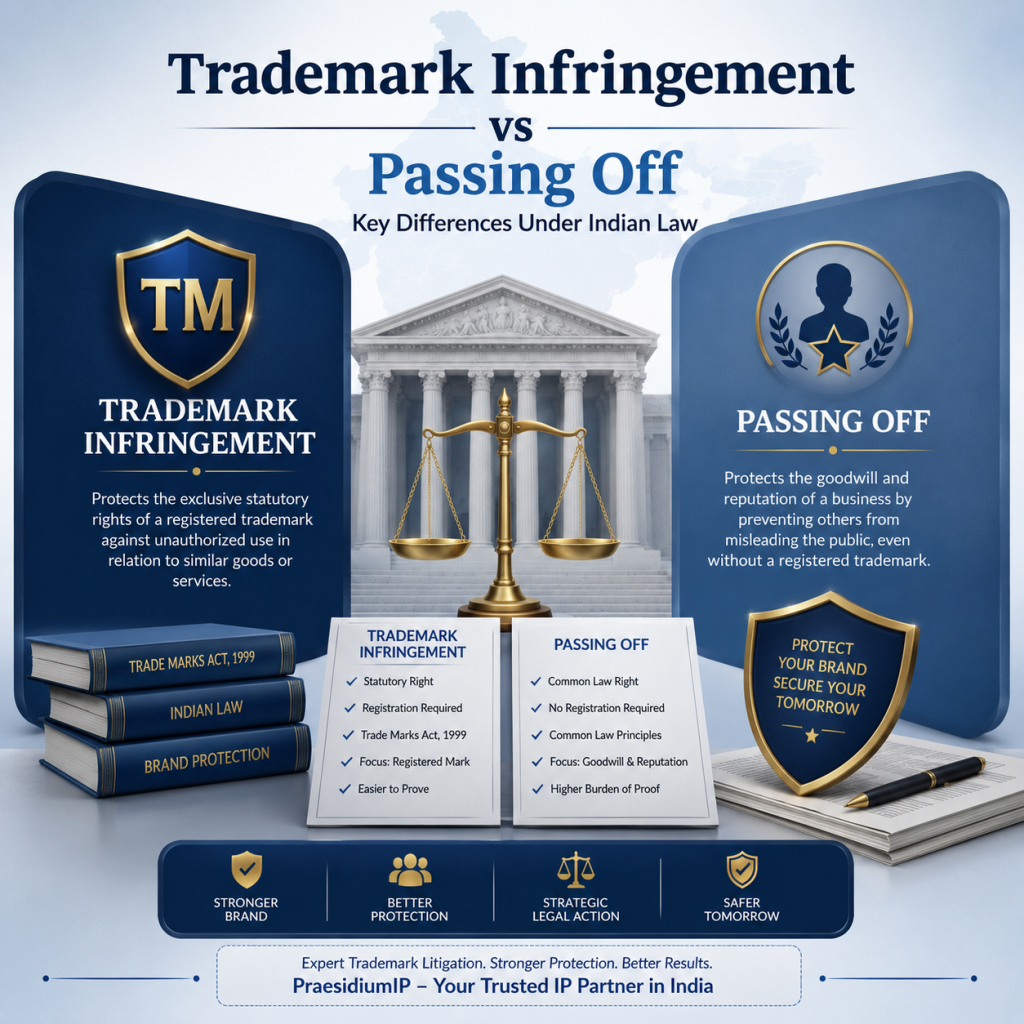
Passing off is a common law remedy that protects the goodwill and reputation of businesses, even when the trademark is not registered.
The primary purpose is to prevent one business from misrepresenting its goods or services as those of another.
Passing off protects the commercial reputation that a business has built over time.
Essential Elements of Passing Off
Businesses may initiate litigation in situations such as:
- Unauthorized use of a registered trademark
- Trademark infringement
- Passing off by competitors
- Counterfeit products
- Copying logos, labels, or packaging
- Domain name disputes
- Online marketplace infringement
- Brand dilution
Prompt legal action helps minimize financial and reputational damage.
Step 1: Identify the Trademark Violation
Before initiating legal proceedings, businesses should determine whether the other party’s use of the trademark constitutes infringement or passing off.
A legal assessment generally includes:
- Similarity between the marks
- Nature of goods or services
- Consumer confusion
- Prior use
- Trademark registration status
- Market reputation
Proper documentation at this stage strengthens the case.
Step 2: Collect Evidence
Evidence plays a crucial role in trademark litigation.
Important documents may include:
- Trademark Registration Certificate
- Trademark application details
- Sales invoices
- Marketing materials
- Website screenshots
- Product photographs
- Social media evidence
- Customer complaints
- Copies of infringing products
Comprehensive evidence increases the chances of obtaining favorable relief.
Step 3: Send a Legal Notice
A legal notice is often the first formal step before approaching the court.
The notice generally includes:
- Details of trademark ownership
- Description of infringement
- Legal provisions violated
- Demand to stop unauthorized use
- Time period for compliance
- Warning regarding legal action
In many cases, disputes are resolved at this stage without litigation.
Step 4: Evaluate the Response
After receiving the legal notice, the opposing party may:
- Agree to stop using the trademark
- Request settlement discussions
- Ignore the notice
- Deny infringement
- Continue unauthorized use
If the dispute remains unresolved, the trademark owner may proceed to court.
Step 5: Filing the Trademark Suit
If the infringement continues, a civil suit may be filed before the appropriate court having jurisdiction.
The plaint generally contains:
- Details of trademark ownership
- Registration particulars
- Facts of infringement
- Evidence
- Relief sought
- Supporting documents
Accurate drafting is essential for effective litigation.
Step 6: Seeking Interim Relief
Trademark owners often seek urgent interim relief to prevent continued infringement during the litigation.
Courts may grant:
Temporary Injunction
Restrains the defendant from using the disputed trademark until the case is decided.
Anton Piller Order
Allows preservation or inspection of infringing goods and evidence.
John Doe Orders
Useful when infringers are unidentified or operating through unknown channels.
Interim orders help prevent further commercial losses.
Step 7: Defendant’s Written Statement
After receiving court summons, the defendant files a written statement explaining:
- Their defence
- Prior use claims
- Differences between trademarks
- Invalidity arguments
- Other legal objections
Both parties then proceed with the litigation process.
Step 8: Evidence and Trial
The court examines documentary and oral evidence submitted by both parties.
Evidence may include:
- Trademark certificates
- Business records
- Expert opinions
- Consumer surveys
- Financial documents
- Market reputation evidence
Witnesses may also be examined and cross-examined during the trial.
Step 9: Final Arguments
Both parties present legal submissions based on:
- Statutory provisions
- Judicial precedents
- Documentary evidence
- Consumer confusion
- Commercial goodwill
The court considers all facts before delivering its judgment.
Step 10: Court Judgment
Depending on the facts of the case, the court may grant:
- Permanent injunction
- Damages
- Account of profits
- Delivery and destruction of infringing goods
- Litigation costs
The judgment protects the trademark owner’s legal rights while preventing future misuse.
Trademark Infringement vs Passing Off: Key Differences
| Basis | Trademark Infringement | Passing Off |
|---|---|---|
| Legal Right | Statutory Right | Common Law Right |
| Registration | Mandatory | Not Required |
| Governing Law | Trade Marks Act, 1999 | Common Law Principles |
| Main Objective | Protect Registered Trademark | Protect Business Goodwill |
| Proof Required | Registration + Unauthorized Use | Goodwill + Misrepresentation + Damage |
| Burden of Proof | Comparatively Easier | Comparatively Higher |
| Available To | Registered Trademark Owner | Any Business with Established Reputation |
Remedies Available in Trademark Litigation
Businesses may seek various legal remedies including:
- Permanent injunctions
- Temporary injunctions
- Damages
- Account of profits
- Destruction of counterfeit products
- Delivery up of infringing materials
- Court costs
These remedies help restore commercial confidence and protect intellectual property.
Importance of Timely Legal Action
Trademark litigation involves procedural, evidentiary, and legal complexities. Professional Trademark Litigation Services assist businesses by:
- Evaluating infringement claims
- Conducting legal analysis
- Drafting legal notices
- Preparing litigation documents
- Representing clients before courts
- Seeking injunctions
- Negotiating settlements
- Protecting intellectual property rights
Professional legal guidance ensures that businesses adopt the most effective strategy for resolving trademark disputes.
Conclusion
Trademark litigation is an essential legal mechanism for protecting business identity and preserving consumer trust. From identifying infringement and issuing a legal notice to obtaining court remedies, each stage of the litigation process plays a vital role in enforcing trademark rights.
Business owners should act promptly when unauthorized use of their trademarks is detected. Timely legal action, supported by experienced Trademark Litigation Services, can help prevent financial losses, safeguard brand reputation, and ensure long-term protection of valuable intellectual property assets.
Can Both Claims Be Filed Together?
Yes.
In many trademark disputes, plaintiffs file both infringement and passing off claims simultaneously.
This strategy is particularly useful because:
- It strengthens the legal case.
- Passing off provides an alternative remedy.
- It protects both statutory rights and business goodwill.
- Courts commonly entertain both claims together where applicable.
FAQs
1. What is the first step in trademark litigation?
The first step is identifying the infringement and collecting evidence before sending a legal notice.
2. Is a legal notice mandatory before filing a trademark suit?
Although not mandatory in every case, issuing a legal notice is generally recommended as it may resolve the dispute without court proceedings.
3. How long does trademark litigation take in India?
The duration varies depending on the complexity of the case, evidence, court schedules, and interim relief applications.
4. Can a court stop trademark infringement immediately?
Yes. Courts may grant temporary injunctions to restrain further use of the infringing trademark during the pendency of the case.
5. What remedies are available in trademark litigation?
Courts may grant injunctions, damages, account of profits, destruction of infringing goods, and litigation costs.
Get Expert Help Today
Need help preparing a claim chart or protecting your invention?
Contact PraesidiumIP
📞 +91 9958196337
📧 info@praesidiumip.com
Written By
Advocate Vineeta Singh
Recent Posts