
Blog
3 Common Reasons Trademark Applications Face Objections
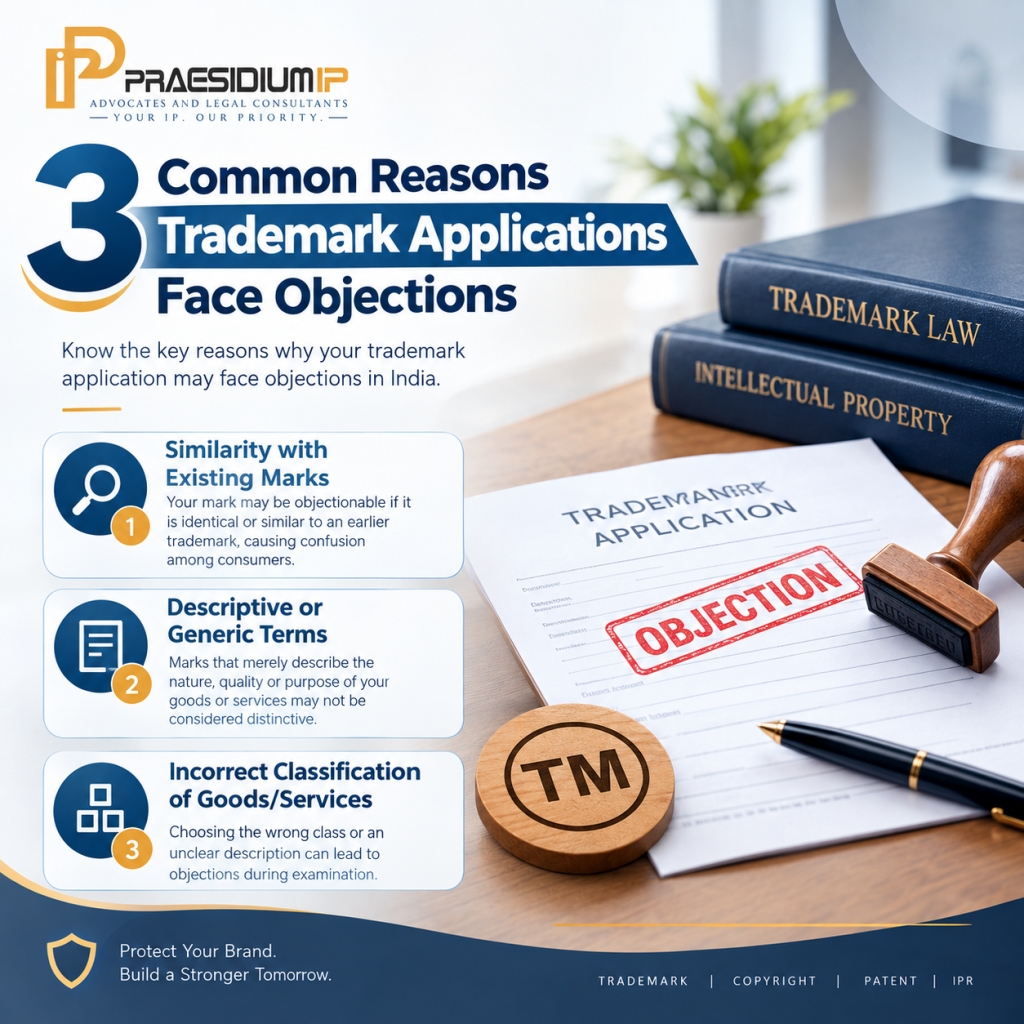
Common Reasons Trademark Applications Face Objections
Applying for trademark registration is an important step for protecting a brand name, logo, slogan or other distinctive mark. However, filing an application does not automatically mean that the trademark will be registered.
After filing, the Trademark Registry examines the application under the applicable provisions of the Trade Marks Act, 1999 and the Trade Marks Rules, 2017. During examination, the Registrar may raise objections if the mark does not satisfy the legal requirements for registration.
For businesses and startups, understanding the common reasons for objections can help reduce avoidable problems during the trademark registration process.
Here are three common reasons trademark applications face objections in India.
1. Similarity with an Existing Trademark
One of the most common reasons for a trademark objection is similarity with an earlier trademark.
Under Section 11 of the Trade Marks Act, 1999, a trademark may face an objection where it is identical or similar to an earlier trademark and the goods or services are identical or similar, creating a likelihood of confusion among consumers.
The Registry examines earlier registered and pending trademarks during examination. Rule 33 of the Trade Marks Rules, 2017 specifically provides for searching earlier trademarks to determine whether an identical or deceptively similar mark exists for the same or similar goods or services.
For example, suppose a business wants to register a brand name that is very similar in appearance, pronunciation or overall commercial impression to an existing mark used for similar products. The examiner may consider that consumers could confuse the two brands.
How can this problem be reduced?
Before filing, applicants should conduct a proper trademark search and evaluate:
- Similar word marks
- Phonetic similarities
- Similar logos or device marks
- Existing applications
- Registered trademarks
- Similar goods or services
- Relevant trademark classes
A proper search does not guarantee registration, but it can help identify potential conflicts before an application is filed.
2. Descriptive or Generic Terms
Another important reason for objection is that the proposed trademark may not have sufficient distinctive character.
Section 9 of the Trade Marks Act, 1999 deals with absolute grounds for refusal. It includes marks that are devoid of distinctive character and marks consisting exclusively of indications that describe characteristics such as the kind, quality, quantity, intended purpose or geographical origin of goods or services.
For example, a business using a highly descriptive expression to directly describe the nature or characteristics of its goods or services may find it difficult to obtain exclusive trademark protection over that expression.
The basic principle is straightforward: a trademark should help consumers identify the commercial source of goods or services rather than merely describe what the goods or services are.
Why is distinctiveness important?
A distinctive brand can separate one business from competitors. A highly descriptive or generic expression, on the other hand, may be considered unsuitable for exclusive appropriation in the marketplace.
However, trademark law contains important nuances, including circumstances where a mark may acquire distinctiveness through use. Therefore, each application needs to be evaluated based on its specific facts and evidence.
3. Incorrect Classification of Goods or Services
Trademark protection is connected to the goods or services for which the mark is applied.
The Trade Marks Act provides for classification of goods and services, with the Registrar determining classification in accordance with the applicable international classification system.
Choosing an inappropriate class or providing an unclear or overly broad description of goods or services can create problems during examination.
For example, a business may provide several different services but select a class without properly considering the actual nature of its activities. If the description does not accurately reflect the business, the application may require clarification, amendment or may face an objection depending on the circumstances.
How can applicants avoid classification problems?
Before filing a trademark application, applicants should carefully determine:
- What goods are being sold?
- What services are being provided?
- Which trademark class covers those goods or services?
- Is the description accurate and sufficiently specific?
- Does the application reflect the actual business activity?
Choosing the appropriate class at the filing stage can help create a clearer application and avoid unnecessary complications.
What Happens After a Trademark Objection?
A trademark objection is generally communicated through an Examination Report. The Registry’s current workflow shows substantive examination under Sections 9, 11 and other applicable provisions, followed by an examination report where objections are raised.
The applicant then needs to respond to the examination report within the prescribed period.
Under Rule 33 of the Trade Marks Rules, 2017, if the applicant does not respond within one month from receipt of the examination report, the Registrar may treat the application as abandoned. Where a response is filed but the objection is not satisfactorily resolved, the matter may proceed to a hearing.
Therefore, receiving an objection does not necessarily mean that the trademark application is permanently rejected. The appropriate response depends on the grounds raised by the examiner and the facts and evidence available to the applicant.
How to Reduce the Risk of Trademark Objection
Businesses can take several practical steps before filing:
1. Conduct a trademark search
Search for identical, similar and phonetically similar marks before submitting the application.
2. Choose a distinctive brand
A distinctive trademark is generally stronger than a mark that merely describes the product or service.
3. Select the correct trademark class
Identify the relevant goods or services and select the appropriate class.
4. Prepare the application carefully
Incorrect applicant details, unclear descriptions or other filing issues can create avoidable complications.
5. Keep evidence of prior use
Where a trademark has already been used, appropriate documentary evidence of use may become relevant depending on the circumstances of the application and objection.
Final Thoughts
Trademark objections can arise for several reasons, but three particularly important areas are similarity with existing marks, lack of distinctiveness or descriptive wording, and classification issues.
The best approach is to identify potential problems before filing, rather than waiting until an examination report is issued. A careful trademark search, appropriate classification and properly prepared application can help businesses build a stronger foundation for trademark protection.
If an examination objection has already been raised, the response should be prepared according to the specific grounds mentioned in the examination report and the facts of the application.
This article is intended for general informational and educational purposes and should not be treated as legal advice. Trademark matters should be evaluated according to the applicable law and the facts of each case.
Get Expert Help Today
Need help
Contact PraesidiumIP
 +91 9958196337
 info@praesidiumip.com
Written By
Advocate Vineeta Singh
Recent Posts