
Blog
Trademark Infringement vs Passing Off
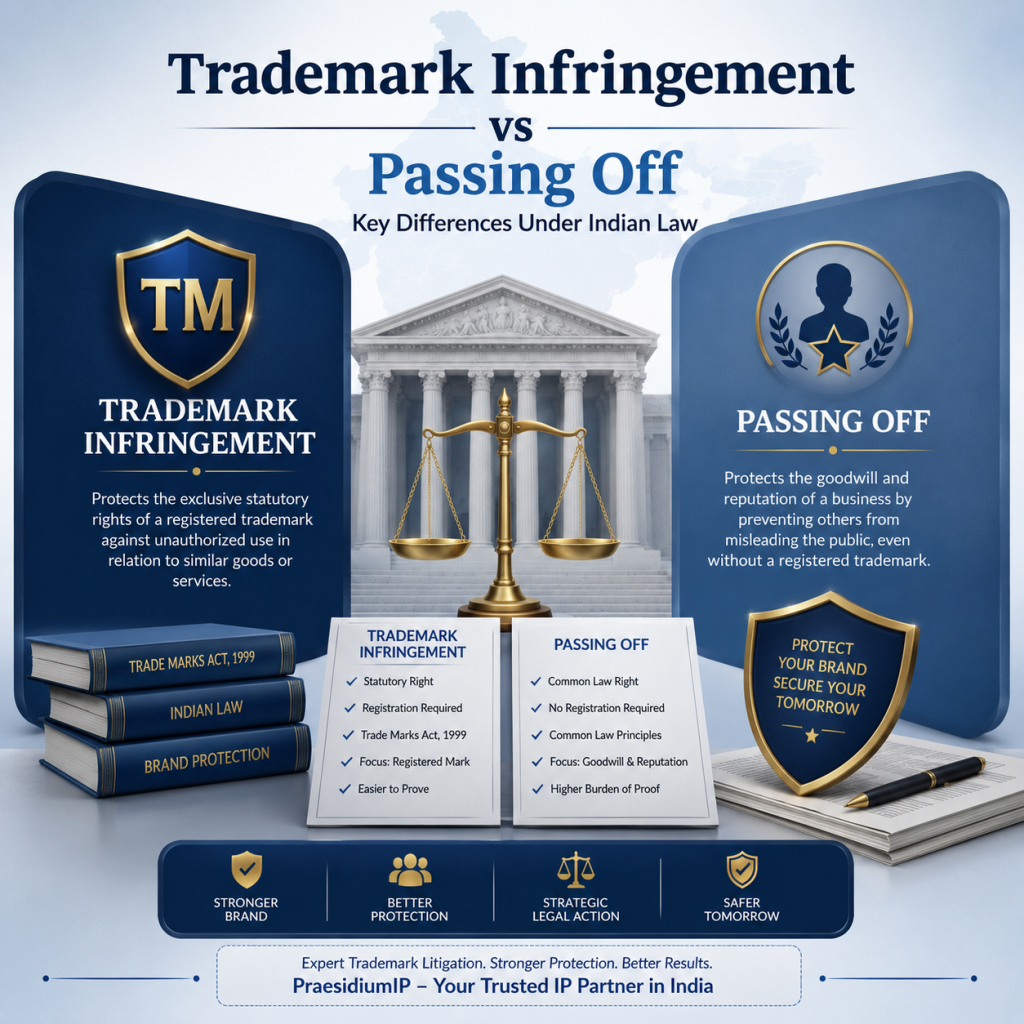
Trademark Infringement vs Passing Off
Businesses spend years building their brand identity, customer trust, and market reputation. However, competitors or counterfeiters may attempt to misuse a brand’s name, logo, packaging, or other identifying elements to gain unfair commercial advantages. Indian trademark law offers two important legal remedies against such misuse—Trademark Infringement and Passing Off.
Although both actions protect businesses from unauthorized use of their brand identity, they differ significantly in terms of legal requirements, evidence, and available remedies. Understanding these distinctions helps business owners, startups, and trademark owners choose the appropriate legal action.
If you are dealing with a trademark dispute, obtaining professional Trademark Litigation Services can help protect your intellectual property rights through appropriate legal proceedings.
Understanding Trademark Infringement
Trademark infringement occurs when a person uses a registered trademark, or a deceptively similar mark, without the owner’s permission in relation to similar goods or services, thereby causing confusion among consumers.
In India, trademark infringement is governed by the Trade Marks Act, 1999, particularly Sections 28 and 29.
A registered trademark owner enjoys exclusive statutory rights to use the mark and prevent unauthorized usage.
Essential Elements of Trademark Infringement
A successful infringement claim generally requires:
- A valid registered trademark.
- Unauthorized use by another party.
- Use in the course of trade.
- Similar or identical goods or services.
- Likelihood of consumer confusion.
Unlike passing off, registration of the trademark is essential for filing an infringement suit.
What is Passing Off?
Passing off is a common law remedy that protects the goodwill and reputation of businesses, even when the trademark is not registered.
The primary purpose is to prevent one business from misrepresenting its goods or services as those of another.
Passing off protects the commercial reputation that a business has built over time.
Essential Elements of Passing Off
Indian courts generally follow the “Classical Trinity Test”:
1. Goodwill
The plaintiff must establish that their business enjoys goodwill and reputation among customers.
2. Misrepresentation
The defendant has made a false representation that causes consumers to believe their goods or services are associated with the plaintiff.
3. Damage
The plaintiff has suffered or is likely to suffer financial loss or reputational damage due to the defendant’s actions.
Unlike infringement, registration is not mandatory for filing a passing off action.
Trademark Infringement vs Passing Off: Key Differences
| Basis | Trademark Infringement | Passing Off |
|---|---|---|
| Legal Right | Statutory Right | Common Law Right |
| Registration | Mandatory | Not Required |
| Governing Law | Trade Marks Act, 1999 | Common Law Principles |
| Main Objective | Protect Registered Trademark | Protect Business Goodwill |
| Proof Required | Registration + Unauthorized Use | Goodwill + Misrepresentation + Damage |
| Burden of Proof | Comparatively Easier | Comparatively Higher |
| Available To | Registered Trademark Owner | Any Business with Established Reputation |
When Should You File an Infringement Suit?
An infringement action is generally appropriate when:
- Your trademark is registered.
- Someone uses an identical or deceptively similar mark.
- Consumers are likely to be confused.
- Your statutory trademark rights are violated.
Businesses often seek professional Trademark Litigation Services when pursuing infringement actions to protect their registered intellectual property rights.
When is Passing Off the Better Remedy?
A passing off action is suitable when:
- Your trademark is not registered.
- Your business has developed substantial goodwill.
- Another business copies your branding or trade dress.
- Customers are being misled.
- Your market reputation is suffering.
Passing off ensures that even unregistered brands receive legal protection where reputation has been established.
Remedies Available Under Indian Law
Whether the claim is for infringement or passing off, Indian courts may grant several remedies.
Injunction
The court may prohibit the defendant from further using the infringing mark.
Damages
The plaintiff may receive monetary compensation for losses suffered.
Account of Profits
The court may direct the defendant to surrender profits earned through unauthorized use.
Delivery Up and Destruction
Counterfeit goods, labels, packaging materials, and infringing products may be ordered to be destroyed.
Costs
The successful party may recover litigation expenses as determined by the court.
Can Both Claims Be Filed Together?
Yes.
In many trademark disputes, plaintiffs file both infringement and passing off claims simultaneously.
This strategy is particularly useful because:
- It strengthens the legal case.
- Passing off provides an alternative remedy.
- It protects both statutory rights and business goodwill.
- Courts commonly entertain both claims together where applicable.
Judicial Approach in India
Indian courts consistently recognize that registered trademarks deserve statutory protection. At the same time, they also acknowledge that businesses with strong market goodwill deserve protection through passing off actions, even without trademark registration.
Courts assess factors such as:
- Similarity of marks
- Nature of goods or services
- Consumer perception
- Overall likelihood of confusion
- Evidence of reputation and goodwill
Each case is decided on its specific facts and evidence.
Importance of Early Legal Action
Trademark disputes can escalate quickly if left unresolved. Delayed enforcement may result in:
- Loss of customers
- Brand dilution
- Financial losses
- Damage to business reputation
- Increased litigation costs
Taking timely legal action helps preserve brand value and prevents further misuse.
How Trademark Litigation Helps Protect Your Brand
Trademark disputes often involve complex legal and factual issues. Professional legal guidance can assist businesses in:
- Assessing the strength of claims.
- Collecting relevant evidence.
- Sending legal notices.
- Negotiating settlements.
- Filing infringement or passing off suits.
- Seeking injunctions before courts.
- Enforcing intellectual property rights.
Businesses facing trademark disputes can benefit from experienced Trademark Litigation Services to safeguard their valuable intellectual property and commercial reputation.
Common Examples of Trademark Infringement and Passing Off
Understanding real-world situations can help businesses identify whether a legal issue involves trademark infringement or passing off.
Trademark Infringement Example
A company registers the trademark “ABC Electronics” for mobile phones. Another business begins selling similar products under the name “ABC Electronic” using a nearly identical logo. Since the original trademark is registered and the competing mark is deceptively similar, the trademark owner may initiate an infringement action under the Trade Marks Act, 1999.
Passing Off Example
A local café has been operating for several years under the name “Coffee Corner” without registering its trademark. A competitor opens a nearby café using a similar name, logo, and store design, causing customers to believe both businesses are connected. Even without trademark registration, the original café may file a passing off action based on its established goodwill and reputation.
Best Practices to Prevent Trademark Disputes
Preventing trademark conflicts is far more cost-effective than resolving them through litigation. Businesses should adopt proactive measures to safeguard their brand identity.
Some recommended practices include:
- Register your trademark as early as possible.
- Conduct a comprehensive trademark search before adopting a new brand name.
- Monitor the Trademark Journal for conflicting applications.
- Maintain records demonstrating continuous use of your trademark.
- Use the ® symbol only after registration and the ™ symbol for unregistered marks.
- Send cease-and-desist notices promptly when unauthorized use is detected.
- Seek professional Trademark Litigation Services to enforce your rights effectively when disputes arise.
By taking these preventive steps, businesses can reduce legal risks, strengthen brand recognition, and protect their valuable intellectual property in the competitive Indian marketplace.
Conclusion
Trademark infringement and passing off serve the common objective of protecting businesses from unfair use of their brand identity, but they operate under different legal principles. While infringement protects registered trademarks through statutory rights, passing off safeguards the goodwill of both registered and unregistered businesses under common law.
Understanding the distinction between these remedies enables businesses to respond effectively to trademark disputes. Whether you own a registered trademark or have built valuable goodwill through long-term use, timely legal action can play a crucial role in protecting your brand, reputation, and commercial interests.
FAQs
1. What is the main difference between trademark infringement and passing off?
Trademark infringement protects registered trademarks under the Trade Marks Act, 1999, whereas passing off protects the goodwill and reputation of businesses, even without trademark registration.
2. Can I file a passing off case without a registered trademark?
Yes. Passing off is available to businesses that can establish goodwill, misrepresentation, and resulting damage.
3. Is trademark registration mandatory for infringement proceedings?
Yes. A trademark infringement action generally requires a valid registered trademark.
4. Can infringement and passing off claims be filed together?
Yes. Indian courts frequently permit both claims to be pursued simultaneously when appropriate.
5. What remedies are available in trademark disputes?
Courts may grant injunctions, damages, account of profits, destruction of infringing goods, and litigation costs.
Get Expert Help Today
Need help preparing a claim chart or protecting your invention?
Contact PraesidiumIP
📞 +91 9958196337
📧 info@praesidiumip.com
Written By
Advocate Vineeta Singh
Recent Posts