
Blog
Can a Poorly Drafted Patent Application Be Rejected? Common Mistakes to Avoid
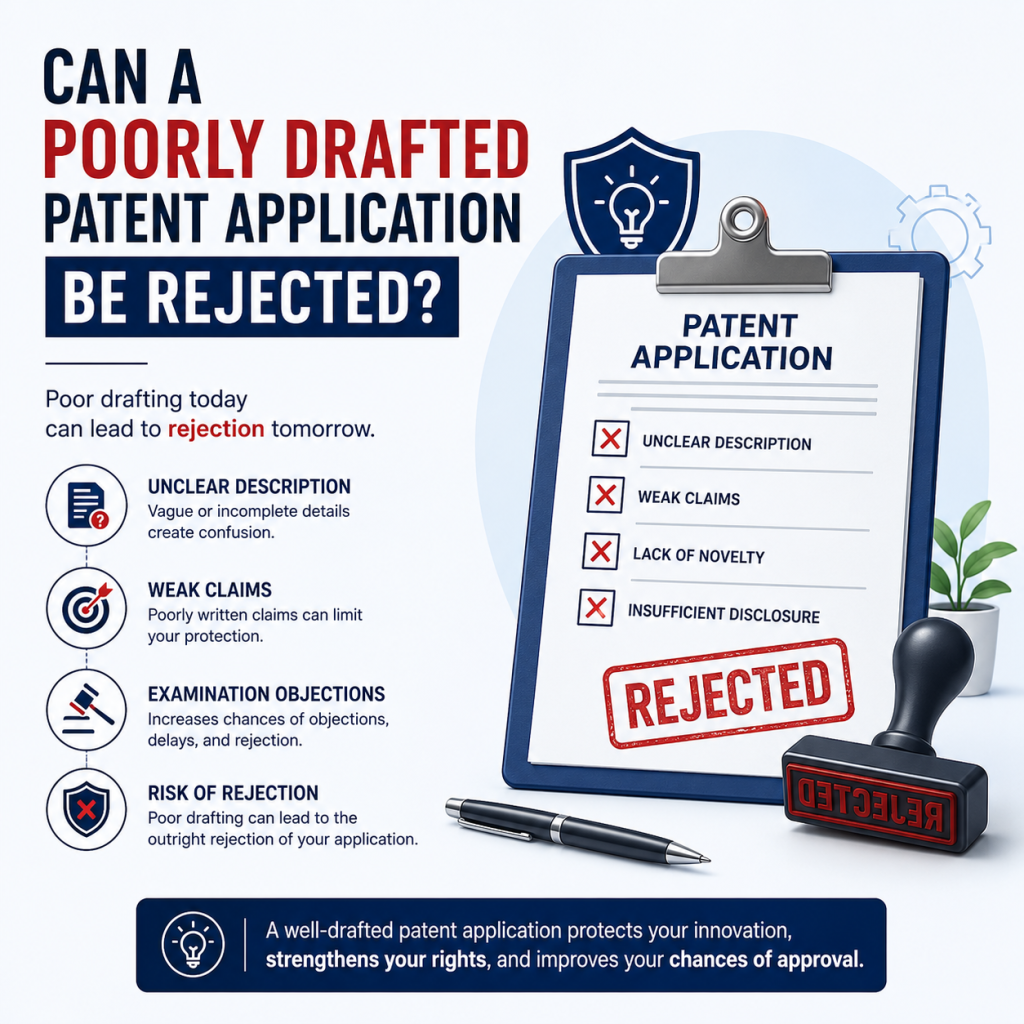
Many inventors believe that having a unique idea is enough to obtain a patent. While innovation is the foundation of every patent, the way your invention is presented to the patent office plays an equally important role. Even a groundbreaking invention can face objections or rejection if the patent application is poorly drafted.
Patent drafting is much more than writing a technical document. It involves describing the invention clearly, defining the scope of legal protection through carefully written claims, and ensuring compliance with patent laws. A poorly drafted application can delay the examination process, increase costs, reduce the value of your intellectual property, or even lead to rejection.
For this reason, businesses, startups, researchers, and inventors rely on professional Patent Preparation and Drafting Services (https://praesidiumip.com/patent-preparation-and-drafting-services) to prepare legally sound patent applications that maximize the chances of approval.
What Is Patent Drafting?
Patent drafting is the process of preparing a detailed document that describes an invention and explains why it deserves legal protection. A patent application must include technical details, innovative aspects, and carefully written claims that define the scope of protection.
A complete patent draft generally includes:
- Title of the invention
- Field of invention
- Background and existing problems
- Summary of the invention
- Detailed description
- Working mechanism
- Patent claims
- Drawings or diagrams
- Abstract
Every section plays an important role in helping patent examiners understand the invention and evaluate its patentability.
Can a Poorly Drafted Patent Application Be Rejected?
Yes.
A patent office can reject an application if it fails to meet legal or technical requirements. While some issues may result in examination objections that can be corrected, serious drafting mistakes can significantly reduce the likelihood of obtaining a patent.
Poor drafting may make it difficult for the patent examiner to understand:
- What the invention actually is
- How it works
- Why it is different from existing inventions
- What exactly the inventor wants to protect
When these questions remain unanswered, the application becomes vulnerable during examination.
Common Reasons Why Poor Patent Drafting Leads to Rejection
1. Unclear Description of the Invention
A patent specification must explain the invention completely.
If the description is vague or incomplete, the examiner may conclude that the invention cannot be understood or reproduced by a skilled person.
For example, missing technical details, unclear processes, or insufficient explanations often result in examination objections.
2. Weak Patent Claims
Patent claims determine the legal protection granted to the inventor.
Poorly drafted claims may be:
- Too broad
- Too narrow
- Ambiguous
- Unsupported by the specification
Weak claims frequently become the biggest reason for patent objections.
3. Lack of Novelty Explanation
Every invention must be new.
If the application fails to explain how the invention differs from existing technology, the examiner may reject it for lack of novelty.
Good drafting highlights the innovative aspects throughout the specification.
4. Failure to Meet Patent Law Requirements
Every patent office has legal drafting standards.
Applications that fail to comply with formatting rules, disclosure requirements, or claim-writing standards often receive objections or rejection.
Professional drafting ensures compliance with these legal requirements.
5. Insufficient Technical Disclosure
A patent application should enable another skilled person to understand and reproduce the invention.
If important technical information is omitted, the examiner may conclude that the invention has not been adequately disclosed.
How Poor Drafting Can Affect Your Patent Even After Approval
Poor drafting does not only affect patent approval.
Even if a patent is granted, weak drafting can create future problems, including:
- Limited legal protection
- Difficulty enforcing patent rights
- Easier opportunities for competitors to design around the patent
- Reduced licensing value
- Lower commercial value
A well-drafted patent remains valuable throughout its lifetime.
Benefits of Professional Patent Drafting
Professional patent drafting offers several advantages:
Better Quality Claims
Experienced patent professionals prepare claims that provide broader and stronger legal protection.
Reduced Examination Objections
Clear drafting minimizes unnecessary questions from patent examiners.
Faster Examination Process
Well-organized applications are easier to review, reducing delays.
Stronger Commercial Value
Investors and businesses prefer patents that offer comprehensive protection.
Better Legal Protection
Strong drafting improves enforceability in infringement disputes.
Best Practices to Avoid Patent Rejection
To improve the chances of patent approval:
- Conduct a prior art search before filing.
- Explain the invention in clear technical language.
- Include detailed drawings wherever required.
- Draft strong and well-supported patent claims.
- Avoid vague or overly broad descriptions.
- Ensure consistency throughout the application.
- Review the application carefully before submission.
- Seek professional drafting assistance.
Why Startups Should Never Ignore Patent Drafting
For startups, patents often become valuable business assets.
Investors evaluate intellectual property portfolios before making funding decisions. A professionally drafted patent demonstrates that the company has taken proper steps to protect its innovation.
Strong patent applications also increase licensing opportunities and improve the company’s competitive position.
Why Choose Professional Patent Drafting Services?
Patent drafting combines technical knowledge with legal expertise.
Professional drafting experts understand patent laws, claim-writing strategies, and examination procedures. They prepare applications that not only improve the likelihood of approval but also maximize long-term intellectual property protection.
If you want to strengthen your patent application, explore our Patent Preparation and Drafting Services:
https://praesidiumip.com/patent-preparation-and-drafting-services
Conclusion
Yes, a poorly drafted patent application can be rejected. Even when an invention is innovative, weak drafting, unclear claims, insufficient disclosure, or non-compliance with patent laws can lead to objections or rejection.
Investing in professional patent drafting is one of the smartest decisions an inventor can make. A carefully prepared application improves approval chances, strengthens legal protection, increases commercial value, and helps safeguard your innovation for years to come.
FAQs
1. Can a poorly drafted patent application be rejected?
Yes. A poorly drafted patent application can be rejected if it contains unclear descriptions, weak claims, insufficient technical details, or fails to meet the legal requirements of the patent office.
2. What are the most common reasons for patent application rejection?
Some common reasons include lack of novelty, obviousness, unclear or incomplete disclosure, poorly drafted patent claims, insufficient technical information, and non-compliance with patent filing requirements.
3. What is the role of patent claims in a patent application?
Patent claims define the legal scope of protection for your invention. Strong, well-drafted claims help protect your innovation, while weak or vague claims can reduce the value of your patent or lead to objections.
4. Can a rejected patent application be corrected?
In many cases, yes. If the patent office issues examination objections, applicants may respond by amending claims, providing additional explanations, or correcting drafting errors. However, major deficiencies may result in permanent rejection.
5. How does professional patent drafting improve approval chances?
Professional patent drafting ensures that your invention is clearly described, the claims are legally sound, and the application complies with patent laws. This significantly reduces the likelihood of objections and improves the chances of patent approval.
6. Is prior art research important before drafting a patent application?
Yes. Conducting a prior art search helps identify existing technologies and ensures your invention is novel. It also helps draft stronger claims that distinguish your invention from prior art.
7. Can I draft a patent application myself?
While it is legally possible to draft your own patent application, patent drafting requires both technical and legal expertise. Errors in drafting can weaken protection or result in rejection, making professional assistance highly recommended.
8. What should a strong patent application include?
A strong patent application should include a clear title, detailed description of the invention, background information, technical drawings (if applicable), an abstract, and carefully drafted patent claims supported by the specification.
9. How long does it take for a patent application to be examined in India?
The examination timeline depends on several factors, including whether a request for examination or expedited examination has been filed. The overall process can take several months to a few years, depending on the complexity of the application and examination workload.
10. Why should startups invest in professional patent drafting services?
For startups, patents are valuable business assets. Professionally drafted patent applications help secure stronger intellectual property rights, attract investors, support licensing opportunities, and provide a competitive advantage in the market.
Get Expert Help Today
Need help preparing a claim chart or protecting your invention?
Contact PraesidiumIP
📞 +91 9958196337
📧 info@praesidiumip.com
Written By
Praesidium IP Team
Recent Posts