
Blog
Best Tips for Copyright Mistakes Businesses Make in India
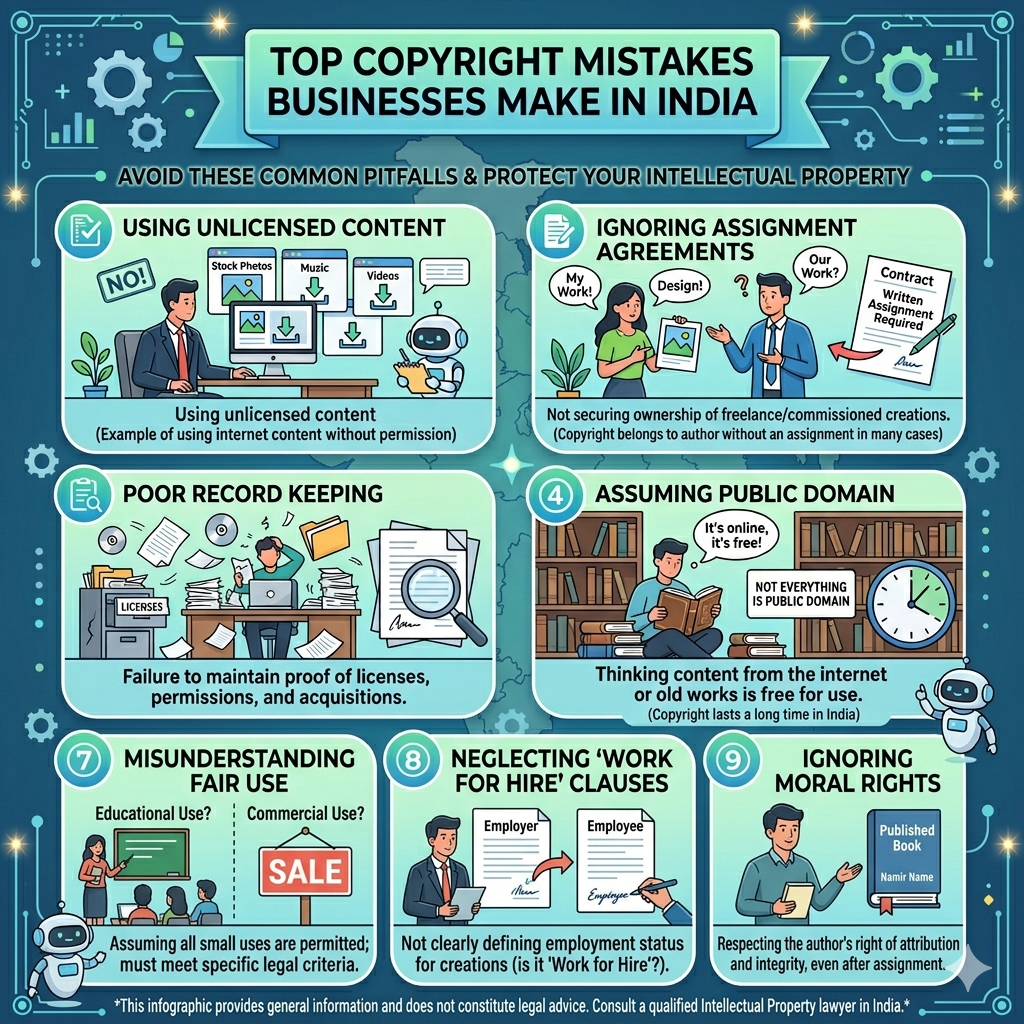
In today’s digital business environment, content is one of the most valuable assets for startups, companies, creators, and online businesses. From website content and logos to software, videos, social media posts, product designs, and marketing materials — everything can be protected under copyright law. However, many businesses in India unknowingly commit serious copyright mistakes that can lead to legal notices, financial penalties, brand damage, and business losses.
Understanding copyright protection and intellectual property rights is essential for every business operating online or offline. Whether you are a startup founder, digital marketer, software company, content creator, or e-commerce seller, failing to comply with Indian copyright law can create serious legal complications.
In this blog, we will discuss the top copyright mistakes businesses make in India, their legal consequences, real-world examples, penalties under Indian law, and practical ways to avoid copyright infringement.
What is Copyright Under Indian Law?
and digital works. In India, copyright protection is governed by the Copyright Act, 1957.
Copyright protects:
- Website content
- Blogs and articles
- Logos and graphics
- Software and source code
- Photographs and videos
- Music and audio
- Marketing materials
- Social media content
- Product packaging designs
The owner of copyrighted work has exclusive rights to reproduce, publish, distribute, modify, or commercially use the work.
Why Copyright Compliance is Important for Businesses
Ignoring copyright compliance can result in:
- Legal notices and lawsuits
- Heavy compensation claims
- Criminal penalties
- Loss of business reputation
- Website takedowns
- Social media account suspension
- Financial losses
Businesses that properly protect their intellectual property rights gain stronger legal protection, brand value, and competitive advantage.
Top Copyright Mistakes Businesses Make in India
A logo can be protected under copyright law if it contains original artistic elements. Businesses should ideally obtain both copyright registration and trademark registration for complete protection.
Documents Required:
• Logo copy
• Identity proof
• Address proof
• NOC from designer
• Power of attorney if applicable
Process:
1. Create original logo
2. File Form XIV
3. Upload documents
4. Pay fee
5. Receive diary number
6. Wait for objection period
7. Examination
8. Certificate issued
Top Copyright Mistakes Businesses Make in India
- Using Copyrighted Images Without Permission
One of the most common copyright mistakes businesses make is using images from Google, social media, or other websites without proper authorization.
Many businesses assume that images available online are free to use, which is legally incorrect.
Common Examples
- Using stock images without purchasing a license
- Copying competitor product photos
- Using celebrity photographs in advertisements
- Downloading images from Pinterest or Instagram
Real-World Example
Several Indian e-commerce sellers have received legal notices from international stock image companies for unauthorized image usage on websites and social media advertisements.
Legal Consequences
Under the Copyright Act, 1957:
- Copyright owners can claim damages
- Courts may issue injunctions
- Unauthorized use may attract civil and criminal liability
How to Avoid This Mistake
- Use licensed stock images
- Purchase commercial usage rights
- Use royalty-free platforms carefully
- Maintain proof of licenses
- Failing to Register Original Work
Many startups and creators create valuable content but never register their copyright.
Although copyright exists automatically upon creation, registration provides stronger legal evidence in disputes.
Commonly Unregistered Works
- Website content
- Mobile applications
- Training materials
- Course videos
- Software code
- Brand creatives
Risks of Non-Registration
- Difficulty proving ownership
- Weak legal position in court
- Higher litigation costs
- Delayed enforcement action
Practical Tip
Businesses should apply for copyright registration in India for all commercially valuable creative works.
- Copying Website Content from Competitors
Many companies copy website text, product descriptions, blogs, or FAQs from competitors to save time or improve SEO rankings.
This is a serious copyright violation and may also affect Google rankings.
Examples
- Copy-paste product descriptions
- Reusing blogs from competitors
- Duplicating service pages
- Copying website structure and content
SEO Impact
Google may penalize websites for duplicate content, leading to:
- Lower search rankings
- Reduced website traffic
- Loss of domain authority
Legal Impact
The original content owner can file:
- Copyright infringement claims
- DMCA takedown requests
- Civil suits for damages
Best Practice
Always create original content with proper SEO optimization.
- Software Piracy and Unauthorized Software Usage
Software piracy remains a major issue among businesses in India.
Using cracked, unlicensed, or pirated software can lead to severe penalties.
Common Violations
- Installing unlicensed software
- Sharing software licenses across teams
- Using pirated design tools
- Unauthorized modification of software
Real-World Example
Many Indian companies have faced audits from software companies for illegal usage of licensed business software.
Legal Penalties
Businesses may face:
- Heavy compensation claims
- Software audits
- Criminal prosecution
- Seizure of systems
Prevention Tips
- Use genuine licensed software
- Maintain software compliance records
- Conduct internal software audits regularly
- Social Media Copyright Violations
Businesses often use trending music, videos, memes, or repost content on social media without permission.
This can result in copyright strikes and account penalties.
Common Social Media Mistakes
- Using copyrighted songs in reels
- Reposting creator videos without consent
- Using movie clips for promotions
- Copying viral content
Consequences
Platforms such as Instagram, YouTube, and Facebook may:
- Remove content
- Suspend accounts
- Block monetization
- Issue copyright strikes
Best Practices
- Use royalty-free music
- Take written permission before reposting
- Credit creators where required
- Use platform-approved audio libraries
- Employee Ownership Disputes
Many businesses fail to define ownership of creative work developed by employees or freelancers.
This creates major legal disputes later.
Common Disputes
- Website developed by freelancers
- Software created by employees
- Marketing creatives made by agencies
- Content ownership conflicts
Legal Problem
Without proper agreements, creators may claim ownership rights over the work.
Example
A startup may pay a freelancer to design a logo, but without a copyright assignment agreement, the freelancer may legally retain ownership.
Prevention Strategy
Use:
- Employment agreements
- Copyright assignment deeds
- Work-for-hire contracts
- NDA agreements
- Lack of Licensing Agreements
Many businesses use third-party content without proper licensing agreements.
This includes:
- Music licenses
- Font licenses
- Software licenses
- Video content
- Digital assets
Common Business Error
Downloading premium fonts or templates from unauthorized sources.
Legal Consequences
Businesses may receive:
- Legal notices
- Compensation demands
- Commercial usage penalties
Solution
Always review licensing terms carefully before commercial use.
- Assuming “Fair Use” Applies Everywhere
Many businesses misunderstand the concept of fair dealing under Indian copyright law.
Not all usage qualifies as fair use.
Incorrect Assumptions
- “Educational use is always free”
- “Small portions can be copied”
- “Credit is enough”
- “Non-profit use is legal”
Reality
Fair dealing in India is limited and depends on specific circumstances.
Commercial usage often requires permission.
- Ignoring Copyright Protection for Digital Content
Modern businesses create massive digital assets but fail to secure them legally.
Unprotected Digital Assets
- Podcasts
- YouTube videos
- Online courses
- Infographics
- Social media creatives
Risk
Competitors may easily copy and monetize the content.
Recommendation
Businesses should maintain:
- Copyright registration records
- Timestamp evidence
- Content archives
- Licensing documentation
- Not Taking Legal Action Against Infringement
Many businesses ignore copyright infringement due to lack of awareness.
Delaying action may weaken legal claims.
Why Enforcement Matters
Timely legal action helps:
- Protect brand reputation
- Prevent financial losses
- Stop unauthorized use
- Strengthen IP portfolio
Actions Businesses Can Take
- Send legal notices
- File copyright infringement suits
- Request injunctions
- Use platform takedown procedures
Penalties for Copyright Infringement in India
Under the Copyright Act, 1957, penalties may include:
Civil Remedies
- Injunctions
- Damages and compensation
- Account of profits
- Delivery of infringing copies
Criminal Penalties
For serious infringement cases:
- Imprisonment from 6 months to 3 years
- Fine from ₹50,000 to ₹2,00,000
Repeat offenses may attract stricter punishment.
Penalties for Copyright Infringement in India
Under the Copyright Act, 1957, penalties may include:
Civil Remedies
- Injunctions
- Damages and compensation
- Account of profits
- Delivery of infringing copies
Criminal Penalties
For serious infringement cases:
- Imprisonment from 6 months to 3 years
- Fine from ₹50,000 to ₹2,00,000
Repeat offenses may attract stricter punishment.
Practical Tips to Avoid Copyright Mistakes
- Register Important Copyrights
Protect valuable creative assets through copyright registration in India.
- Use Written Agreements
Clearly define ownership rights with employees, freelancers, and agencies.
- Create Original Content
Avoid copying competitor material.
- Maintain License Records
Keep invoices and proof for all purchased assets.
- Conduct Copyright Audits
Review website, software, and marketing content regularly.
- Train Employees
Educate teams about intellectual property rights and legal compliance.
- Consult IP Professionals
Seek guidance from copyright and intellectual property experts.
Importance of Copyright Protection for Startups
For startups, intellectual property often becomes the most valuable business asset.
Proper copyright protection helps:
- Attract investors
- Build brand credibility
- Prevent content theft
- Increase business valuation
- Strengthen legal rights
Ignoring copyright compliance can create expensive legal challenges during business growth or funding rounds.
Conclusion
Copyright compliance is no longer optional for modern businesses in India. From startups and digital creators to large corporations and e-commerce platforms, every business must understand and respect intellectual property rights.
Simple mistakes like using copyrighted images, copying website content, or failing to sign ownership agreements can lead to serious legal and financial consequences.
Businesses should proactively secure copyright registration in India, maintain licensing records, create original content, and seek legal guidance whenever necessary.
Protecting intellectual property not only prevents legal disputes but also strengthens business credibility, brand value, and long-term growth.
If your business creates valuable content, software, branding, or digital assets, investing in proper copyright protection is one of the smartest legal decisions you can make.
FAQs on Copyright Mistakes in India
- Is copyright registration mandatory in India?
No, copyright exists automatically after creation. However, registration provides stronger legal evidence and protection.
- Can I use Google images for my business website?
No. Most images found on Google are protected by copyright and require permission or licensing.
- What happens if my business copies website content?
You may face copyright infringement claims, legal notices, SEO penalties, and compensation demands.
- Can employees own work created for a company?
Yes, if ownership terms are not clearly mentioned in employment or assignment agreements.
- Is using copyrighted music on Instagram legal?
Commercial usage of copyrighted music without authorization may violate copyright law and platform policies.
- What is the punishment for copyright infringement in India?
Penalties may include imprisonment, fines, injunctions, and financial compensation under the Copyright Act, 1957.
Get Expert Help Today
Need help preparing a claim chart or protecting your invention?
Contact PraesidiumIP
📞 +91 9958196337
📧 info@praesidiumip.com
Written By
Praesidium IP Team
Recent Posts