
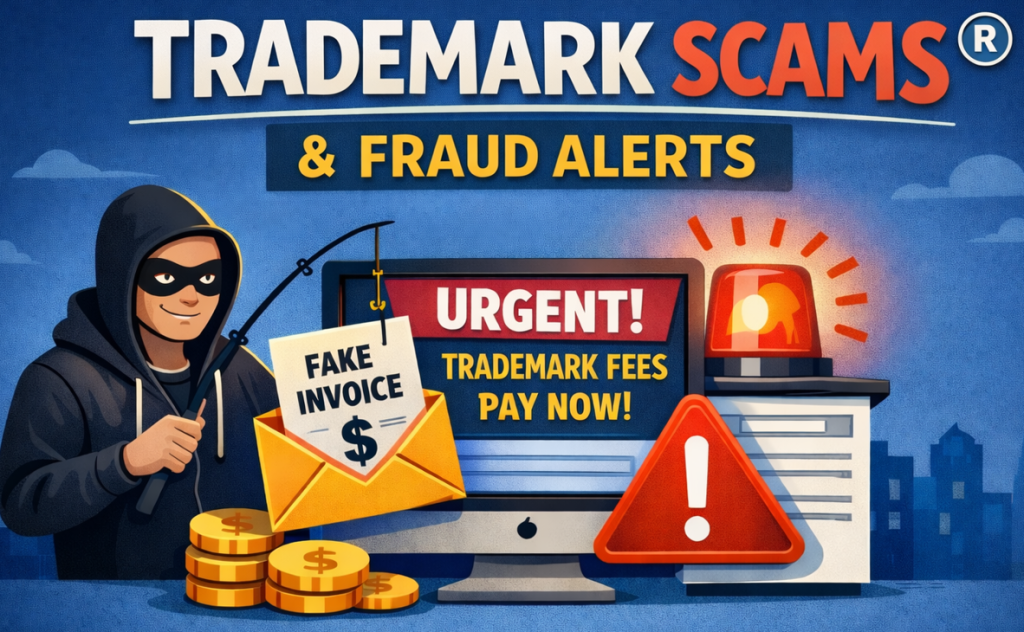
In today’s fast-growing startup and business ecosystem, trademarks have become one of the most valuable business assets. Unfortunately, the rise in trademark registrations has also led to a sharp increase in trademark scams and fraud alerts. Business owners, startups, and even established brands are increasingly being targeted through fake trademark notices, misleading emails, and fraudulent calls demanding money in the name of trademark protection.
Understanding how these scams work and how to verify genuine communications is critical to safeguarding your brand, finances, and overall intellectual property protection.
What Are Trademark Scams?
Trademark scams are deceptive practices where fraudsters impersonate government authorities, legal firms, or intellectual property offices to extract money or sensitive information from trademark owners. This form of trademark registration fraud often looks extremely professional, using official-sounding language, logos, and reference numbers to appear legitimate.
Victims are usually contacted soon after filing a trademark application, especially during the Trademark Filing Process in India, when applicant details become publicly accessible.
Common Types of Trademark Fraud Alerts
1. Fake Trademark Objection or Opposition Notices
Scammers send emails or letters claiming that your trademark application has received an objection or opposition and demand immediate payment to “resolve” the issue. Such trademark filing scam tactics often create panic by mentioning short deadlines and legal consequences.
2. False Trademark Renewal Alerts
You may receive messages stating that your trademark is about to expire and needs urgent renewal, even when it is not due. This is a common trademark renewal scam, where fraudsters charge excessive fees for services that are not required.
3. Bogus Government Fee Demands
These scams claim additional government fees are required to complete trademark registration. In reality, official trademark fees in India are fixed and paid only through the authorized IP India portal.
4. Fake Legal Firms or IP Consultants
Fraudsters pose as trademark attorneys or IP consultants offering to fast-track registration or handle objections for a fee, without any real authority or legal backing—contributing significantly to trademark fraud in India.
5. Publication & Registry Scams
Some fraudsters ask for payment to publish your trademark in private journals or databases, falsely implying that such publication is mandatory under trademark law.
How Trademark Scammers Get Your Details
Trademark applications filed in India are publicly searchable on the IP India website. Scammers routinely monitor newly filed applications and extract:
- Applicant name
- Email address
- Phone number
- Trademark application number
They then contact applicants while posing as officials or professionals, knowing that many first-time applicants are unfamiliar with the trademark registration process.
Red Flags to Identify Trademark Scams
- Urgent or threatening language demanding immediate payment
- Requests for payment via personal bank accounts or UPI
- Emails from generic domains like Gmail or Yahoo
- Incorrect application numbers or vague descriptions
- Claims that do not match the status shown on the official trademark portal
If a message creates fear, pressure, or confusion, it is often a trademark scam alert.
How to Verify Genuine Trademark Communications
Check the Official IP India Portal
Always verify the status of your trademark directly on the government website.
Consult Your Trademark Attorney
If you have filed through a professional firm, confirm any communication before taking action.
Do Not Respond Directly
Avoid replying to suspicious emails or clicking on unknown links.
Verify Email Domains
Official trademark communications come only from authorized government or verified legal domains
Legal Consequences of Falling for Trademark Fraud
Falling victim to trademark scams can lead to:
- Financial losses
- Disclosure of confidential business information
- Unauthorized filings or misuse of your brand
- Delays in legitimate trademark registration
In serious cases, scammers may misuse your trademark, causing long-term damage to your brand identity.
How to Protect Your Trademark from Scams
- File your trademark through a trusted IP law firm
- Regularly monitor your trademark application status
- Educate your team about common trademark fraud alerts
- Never make payments without proper verification
- Keep records of all official trademark communications
Professional legal guidance significantly reduces the risk of falling prey to trademark registration fraud.
Why Professional Trademark Support Matters
The trademark ecosystem involves multiple stages, strict deadlines, and legal formalities. Having expert support during the Trademark Filing Process in India ensures that all communications are verified, objections are handled lawfully, and fraudulent claims are filtered out before causing damage.
Conclusion
Trademark scams and fraud alerts are becoming increasingly sophisticated, targeting businesses at vulnerable stages of registration and renewal. Awareness is the first line of defense. By understanding common trademark scam tactics, verifying every notice, and relying on experienced trademark professionals, businesses can protect their brand identity and financial interests.
Your trademark represents your reputation—guard it with the same seriousness as any other core business asset.